



Beware:
Model Q Scams
Model Q refers to a criminal method used by organised crime groups that falsely exploit the QNET name. Learn how these scams work and how to stay safe.
What is Model Q?
For several years, organised criminal networks operating across West and Central Africa have misused the QNET name and business model to deceive victims through fraudulent employment schemes, human trafficking, migrant smuggling and other forms of organised crime. This has often led to criminal activity being mistakenly associated with QNET’s legitimate direct-selling business.
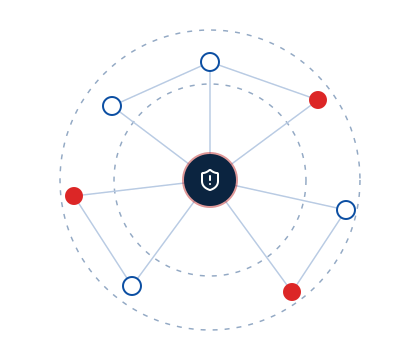
Following years of engagement between QNET and regional law-enforcement agencies, including the Economic and Organised Crime Office (EOCO) of Ghana and INTERPOL, the term Model Q is now used by law enforcement to describe this organised criminal methodology. The term helps distinguish the criminal network from QNET’s legitimate business operations and provides a common reference point for cross-border investigations and public awareness.
Model Q is an organised transnational criminal methodology
that combines elements of:
Human
trafficking
Migrant
smuggling
Employment
fraud
Financial
fraud
Cybercrime
Psychological
coercion
Digital
recruitment
Understanding how Model Q operates is the first step in recognising these criminal tactics, protecting potential victims, and supporting efforts to combat organised crime.
In the News
Business Insider Africa
Inside ‘Model Q’: How Online Recruitment Scams and Organised Crime are Hijacking Trusted Brands Across West Africa
3News Ghana
EOCO Warns of Model Q Trafficking Network Using Fake Jobs and Investment Schemes to Lure Youth
MyJoyOnline
QNET Renews Commitment to EOCO Partnership in Combating Human Trafficking and Model Q Criminal Networks
EOCO Website
EOCO Raids “Model Q” and “Ignite” Fraud and Trafficking Scheme and Rescues 39 Persons in Hohoe
Key Facts About Model Q
Model Q is not a company.
Model Q is not another name for QNET.
Model Q is a criminal methodology identified by law enforcement.
Model Q is not a company.
Model Q is not another name for QNET.
Model Q is a criminal methodology identified by law enforcement.
Criminal networks using the Model Q methodology have impersonated legitimate organisations, including QNET, to deceive victims.
QNET has worked with law enforcement agencies to help combat criminal misuse of its brand.
Always verify business opportunities through official company channels before making payments or travelling.
Criminal networks using the Model Q methodology have impersonated legitimate organisations, including QNET, to deceive victims.
QNET has worked with law enforcement agencies to help combat criminal misuse of its brand.
Always verify business opportunities through official company channels before making payments or travelling.
How Model Q Works
Warning Signs
Potential indicators of a Model Q scam include:

The offer
- Promises of overseas jobs requiring little experience
- Requests for upfront payments
- Forged employment contract

The pressure
- Pressure to travel quickly
- Meetings held in private apartments instead of offices
- Pressure to recruit friends or family

The control
- Confiscation of passports
- Restricted movement
- Limited communication with family
- Instructions to hide the true nature of the work
How Model Q Differs from Legitimate Direct Selling
Frequently Asked Questions
Is Model Q a company?
Why is it called Model Q?
The name has been used by law-enforcement agencies in West Africa during regional coordination efforts to describe this evolving criminal methodology that impersonates QNET. Public reporting to date focuses on the characteristics of the network rather than the origin of the label.
Who is fighting Model Q?
Recent regional initiatives have involved EOCO, the Ghana Police Service CID, INTERPOL, ECOWAS representatives and other West African law-enforcement agencies working together to improve intelligence sharing and coordinated enforcement.
Is Model Q the same as QNET?
The EOCO–INTERPOL regional workshop held in July 2026 has emphasised that organised criminal groups have misused QNET’s name, products and business model to create credibility when deceiving victims. QNET has partnered with Ghana’s EOCO to support investigations, intelligence sharing and public awareness efforts aimed at disrupting these criminal networks.
How do criminals misuse legitimate companies?
Organised criminal networks often exploit the names, brands and reputations of legitimate companies to make fraudulent schemes appear credible. This can include using company logos, copying websites, creating fake social media accounts, distributing counterfeit marketing materials or falsely claiming to represent a recognised organisation.
In some cases, criminals advertise fake employment opportunities, investment schemes or business opportunities using the identity of a legitimate company without its knowledge or authorisation. This type of impersonation is a common tactic across many industries, including banking, technology, government agencies and consumer brands.
Always verify that any communication comes from an official company source before sharing personal information, making payments or accepting an opportunity.
Can criminals misuse any legitimate company?
Yes. Criminals can misuse the name, logo, products, websites or reputation of almost any legitimate company or organisation to make a fraudulent scheme appear credible. This is known as business impersonation or brand impersonation.
They may create fake websites, social media profiles, email addresses, documents, job offers or payment requests that appear to come from a recognised company. The objective is usually to exploit the public’s trust in that organisation to obtain money, personal information or access to potential victims. Impersonation scams can affect businesses, banks, technology companies, charities and even government or law-enforcement agencies.
The legitimate company may have no knowledge of or involvement in the criminal activity. Anyone receiving an unexpected offer or request should verify it independently through the organisation’s official website or published contact details before making a payment, sharing personal information or travelling for an opportunity.
How do I know if a business opportunity is legitimate?
Before joining any business opportunity, take time to verify its authenticity. Some practical steps include:
- Visit the company's official website and confirm that the opportunity is described there.
- Contact the company directly using contact information published on its official website.
- Check whether the company operates legally in your country and complies with applicable regulations.
- Ask for written documentation explaining the business model, products and compensation plan.
- Be cautious if you are asked to pay large upfront fees, surrender your passport, travel immediately or make decisions under pressure.
- Be wary of promises of guaranteed income or unrealistic financial returns.
- Seek independent advice if you are unsure before making any financial commitment.
Legitimate businesses welcome questions, provide transparent information and allow prospective participants sufficient time to make informed decisions. Criminal networks often rely on urgency, secrecy and deception to prevent victims from verifying the facts.
Where should I report suspected Model Q activity?
If you suspect Model Q-related criminal activity, report it to the appropriate authorities as soon as possible.
Contact your local police if you believe a crime has been committed or someone is in immediate danger.
Report suspected human trafficking, migrant smuggling, or organised fraud to the relevant national law-enforcement agency in your country.
If the QNET name or brand has been misused, report it directly to QNET through its official fraud reporting channels:
- Contact your local police if you believe a crime has been committed or someone is in immediate danger.
- Report suspected human trafficking, migrant smuggling, or organised fraud to the relevant national law-enforcement agency in your country.
- If the QNET name or brand has been misused, report it directly to QNET through its official fraud reporting channels:
Providing as much information as possible – including names, contact details, websites, social media accounts, payment requests, and supporting documents – can help authorities and QNET investigate the matter more effectively.
A Quick Guide to Staying Safe
Potential indicators of a Model Q scam include:
How Criminal Networks Misuse Legitimate Businesses
- Criminals may falsely claim to represent legitimate organisations.
- They set up fake websites that look like official ones.
- They use company logos to appear official.
- They create fake WhatsApp groups to recruit and communicate.
- They share real or copied product catalogues to build trust.
- They organise fake training sessions to convince victims.
- They create fake business cards with false contact details.
- They make fraudulent promises of income, jobs, or business opportunities.
- They impersonate employees or representatives of known companies.
What To Do If You Suspect Model Q
- Do not pay money.
- Do not surrender your passport.
- Verify the company independently.
- Contact local police.
- Report suspected trafficking.
- Report misuse of the QNET brand through official channels.
Public-Private Partnerships
Against Organised Crime
EOCO
INTERPOL
National police services
Government agencies
Private sector
UNODC PPP framework
QNET, for its part, supports international initiatives like the United Nations Office on Drugs and Crime (UNODC) public-private partnership framework, which encourages collaboration between governments and businesses to combat organised crime more effectively.
By working together, public and private partners can respond more effectively to organised crime, protect communities, and reduce opportunities for criminals to operate.
If the QNET name or brand has been misused,
report it directly to QNET
Providing as much information as possible – including names, contact details, websites, social media accounts, payment requests, and supporting documents – can help authorities and QNET investigate the matter more effectively.