


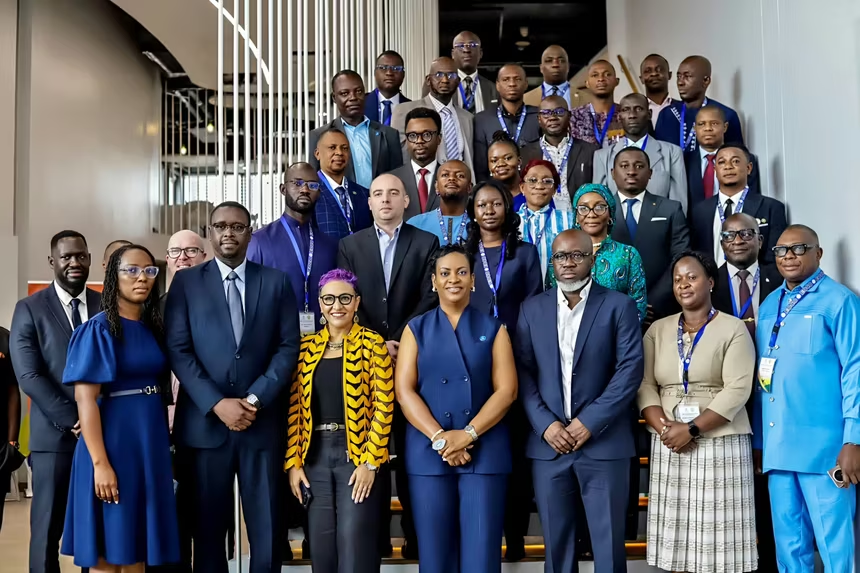
On 6 July 2026, QNET participated in the EOCO–INTERPOL Regional Coordination and Case Resolution Workshop on Combating Human Trafficking and Migrant Smuggling in Accra, Ghana.
In this article, we’ll break down the details for you:
Who participated in this workshop?
The three-day workshop brought together regional stakeholders to exchange knowledge and strengthen the collective response to cross-border crime.

Participants included investigators, prosecutors, law enforcement agencies, immigration officials, financial crime experts, INTERPOL representatives and regional partners from West and Central Africa. QNET also participated alongside public and private sector stakeholders committed to tackling organised crime.
What did they talk about?
- Cross-border cases: Participants reviewed ongoing cross-border cases and exchanged investigative experiences. Discussions focused on migrant smuggling, recruitment fraud, online scams and other forms of organised crime.
- Emerging Criminal Methods: A key area of discussion was the emerging modus operandi and the challenges posed by criminal networks operating across multiple jurisdictions.
- Regional cooperation: Discussions highlighted the importance of intelligence sharing, joint investigations, victim identification and closer cooperation between governments, law enforcement agencies and responsible private-sector organisations.
- Misuse of the QNET Name: QNET has repeatedly warned that fraudsters misuse its name to promote fake employment opportunities, fraudulent investment schemes, overseas travel offers and misleading business propositions. These schemes are designed to gain the trust of unsuspecting victims before persuading them to hand over money or personal information.
What was QNET’s role in this workshop?
QNET shared its experience in supporting investigations into individuals and criminal networks falsely claiming to represent the company.
Representing QNET was Chief Communications Officer of QI Group, QNET’s parent company, Ramya Chandrasekaran, who highlighted the importance of partnerships between public and private-sector organisations in tackling organised crime and spoke about the company’s efforts to address brand impersonation in the region.

“In the West Africa region, where we are facing the majority of the problems related to brand impersonation of QNET, we have been implementing public awareness and education campaigns for a number of years,” explained Chandrasekaran.
She added: “We’ve also done continuous media engagement so that we can reach more members of the public, especially through television and radio. These are for people who are not necessarily on the internet or social media.”
She explained that QNET does not offer employment opportunities, overseas travel programmes or guaranteed investment returns. It is a direct selling company that offers products through its eCommerce platform, with commissions paid to Independent Distributors based on eligible product sales in accordance with the company’s Compensation Plan.
While these criminal activities have led to questions about whether QNET is a scam or involved in recruitment or investment fraud, the company has consistently maintained that these schemes are carried out by individuals and organised criminal groups acting without its knowledge or authorisation.
What does this mean for the future of QNET?
The workshop reflects QNET’s long-term commitment to combating fraud and supporting responsible direct selling across the region. Continued collaboration with governments, law enforcement agencies and other stakeholders will help strengthen efforts to protect consumers while creating a safer environment for Independent Distributors to build sustainable businesses.
Commenting on the importance of regional cooperation, Chandrasekaran said, “No single institution can address this problem alone. Criminal networks operate across borders, so our response must also be coordinated, practical and cross-border.”
How did QNET get to be a part of this very important workshop?
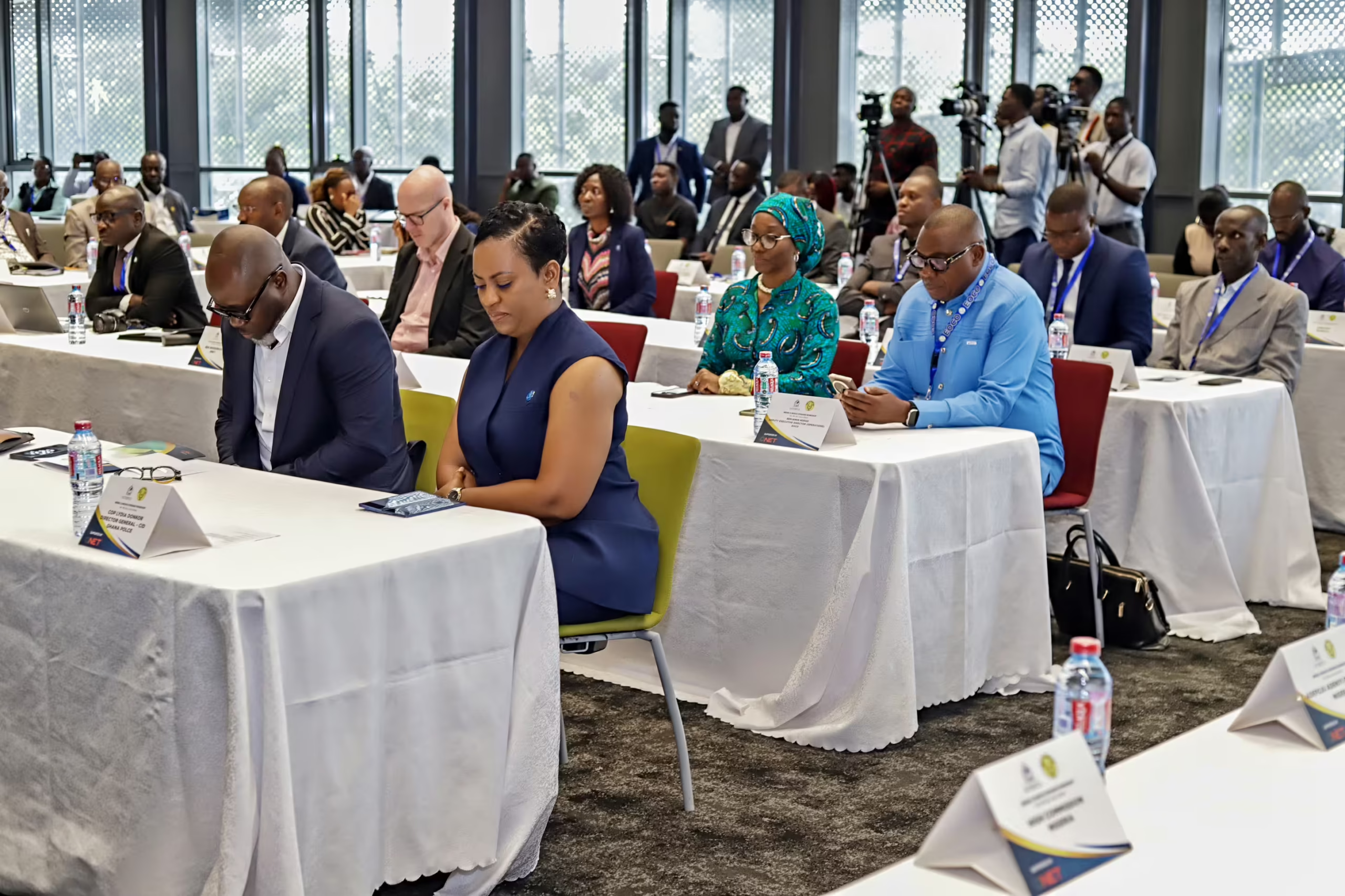
QNET attended the workshop through its partnership with Ghana’s Economic and Organised Crime Office (EOCO). The partnership was first established in response to a growing number of cases involving criminals falsely claiming to represent the company.
Recognising the need for a coordinated response, QNET and EOCO signed a Memorandum of Understanding in July 2025 to strengthen cooperation, assist law enforcement efforts and improve public awareness of these fraudulent schemes.
Since then, QNET and EOCO have continued working together on investigations, public education initiatives and efforts to address the criminal misuse of the QNET name.
What are QNET’s plans to keep raising awareness against all these issues, especially QNET Scam allegations?
Alongside its collaboration with EOCO, QNET has continued working with government agencies, media organisations and community stakeholders to help people recognise fraudulent schemes and verify information before responding to offers claiming to be linked to the company.
QNET has consistently encouraged members of the public to rely only on its official communication channels when verifying information about its products, policies or business opportunity. It has also strengthened its compliance framework, including mandatory KYC for prospective Independent Distributors, as part of its commitment to responsible direct selling and consumer protection.
Continuing the Collaboration
The EOCO–INTERPOL Regional Coordination and Case Resolution Workshop highlighted the importance of stronger regional coordination in tackling human trafficking, migrant smuggling and organised fraud. By bringing together investigators, prosecutors, immigration authorities, INTERPOL and private-sector partners, the workshop created an opportunity to exchange operational knowledge, strengthen cross-border cooperation and reinforce collective action against criminal groups operating across West and Central Africa.
For QNET, the workshop also provided an opportunity to strengthen collaboration with EOCO and other stakeholders while continuing efforts to combat fraud and protect vulnerable communities.